
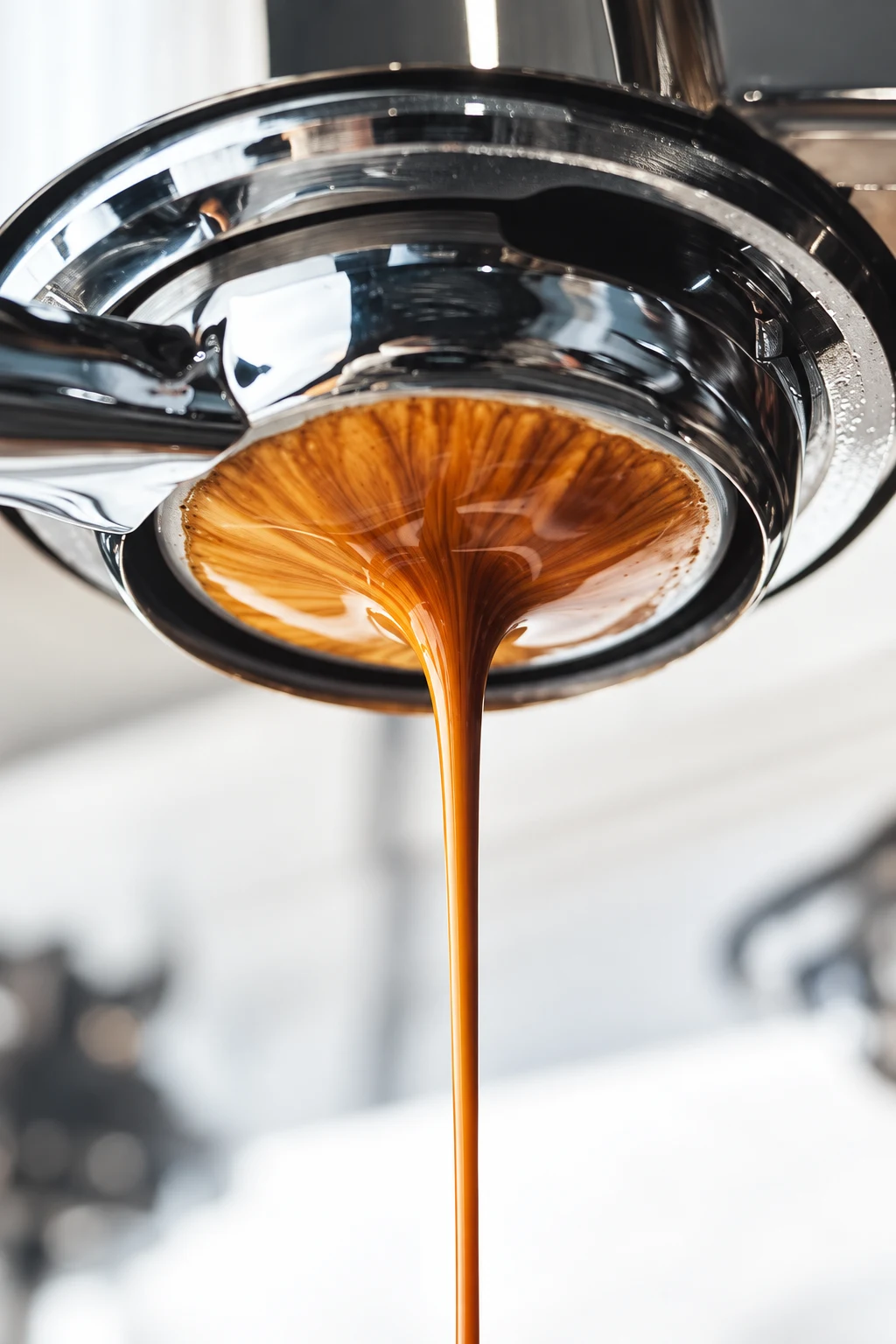
An espresso grinder is a powerful adjustment tool, but turning its dial at random rarely solves a disappointing coffee. Grind size works together with dose, beverage weight, distribution, temperature and the condition of your equipment. If several of these change at once, a better cup can be difficult to repeat. This guide offers a practical sequence for a home espresso machine with a portafilter. It helps you decide what to check first, when to make the grind finer or coarser, and when the grinder is probably not the main problem.
Define a starting recipe
Begin with a basket appropriate for your chosen dose and follow the equipment guidance. Weigh the dry coffee and the finished drink if you have a suitable scale. A ratio such as one part dry coffee to two parts beverage can be a convenient starting experiment, but it is not a universal target or a definition of good espresso. Different coffees and baskets can work better elsewhere. The purpose of a starting recipe is to give you something stable to compare, not to force every coffee into the same numbers.
Record three things: the dose, the beverage weight and the approximate extraction time measured consistently. Note whether you start the timer when the pump starts or when coffee first appears, and keep that convention. Those numbers describe what happened; taste decides whether the result suits you. If you change the dose, the grind and the stop point together, an improved result will not tell you which adjustment helped. Build a baseline first, then make one deliberate change at a time.
Check cleanliness and preparation
Before changing grind size, inspect the basket and shower area as instructed by the manufacturer. Old coffee oils, blocked holes or an unevenly seated basket can interfere with a fair test. Use the appropriate cleaning procedure and keep the basket dry before dosing. Make sure the machine has reached its intended operating condition. A hurried first shot from equipment that is not ready should not become the reference for every adjustment that follows.
Distribute the grounds evenly and tamp in a consistent, level way. Avoid creating a mound on one side or leaving obvious gaps around the edge. Water can find easier paths through an uneven coffee bed, producing an extraction that is uneven even when the total time looks plausible. Buying more accessories is not the first requirement. A repeatable preparation routine, a suitable basket and a stable dose make the grinder's effect much easier to interpret.
What a finer grind changes
With the other variables held reasonably stable, a finer grind commonly increases resistance to water flow and changes extraction. It may help when a shot runs unusually quickly and tastes thin or sharply unfinished. Make a small adjustment rather than jumping across several dial positions. Some grinders retain grounds from the previous setting, so the next dose may not fully represent the new position. Follow the grinder's instructions for adjustment and any recommended clearing procedure.
Finer is not automatically better. If flow becomes extremely slow, stops or turns erratic, continuing to tighten the grind may worsen the problem. Excessive resistance can also encourage water to find uneven paths. Return to the previous workable setting and check dose and preparation. Do not use the machine's pump or the grinder outside its instructions to force a result. The objective is a controlled extraction with a pleasing taste, not the slowest possible shot.
When a coarser grind may help
If a familiar recipe suddenly runs much slower than usual, a small coarser adjustment may restore the intended flow. First confirm that the dose has not increased and the basket is not overfilled. More coffee in the same basket changes the available space and resistance, so a dosing error can look like a grind problem. Compare the current preparation with your successful baseline before altering the dial.
A coarser grind can also be part of correcting a harsh or drying cup, but bitterness alone is not enough to diagnose the cause. Roast character, an overly long beverage, dirty equipment and uneven extraction can create overlapping impressions. Stop at a sensible beverage weight, taste carefully and examine the complete routine. If you shorten the drink and coarsen the grind simultaneously, you may find a pleasant cup but lose the ability to reproduce the improvement confidently.
Diagnose sourness without guessing
A distinctly sharp, thin and unfinished espresso can suggest insufficient extraction, especially when the flow is fast. Under those conditions, a modestly finer grind is a reasonable test. Keep the dose and beverage target stable so that the comparison means something. However, a coffee's natural flavour can also include fruit-like brightness. The aim is not to eliminate every impression of acidity, but to decide whether the cup feels balanced and enjoyable.
Taste the espresso after it has cooled slightly and compare it with your own notes. Ask whether the sharpness comes with sweetness and a satisfying finish, or whether it feels hollow and abrupt. If you repeatedly dislike a particular style despite consistent preparation, a different blend may be a better choice than increasingly extreme settings. Our coffee blend tasting guide helps separate personal preference from a preparation problem.
Diagnose bitterness and dryness
Bitterness can be part of espresso's character, while an unpleasant drying finish is a useful signal to investigate. Check whether you are allowing too much liquid through the coffee bed for the recipe you intended. If so, restore the beverage target before changing grind size. Clean the relevant parts and confirm that the coffee is suitable for your preferred style. A dark, roasted flavour will not become a delicate floral cup merely through a different dial position.
Uneven extraction can produce sharpness and bitterness in the same drink. That combination often tempts people into alternating finer and coarser settings without progress. Return to distribution, tamp level, basket fill and a stable dose. Observe whether flow is consistent from one preparation to the next. If identical settings produce wildly different results, improve repeatability before chasing a new recipe. A useful diagnosis explains the pattern across several cups, not just one disappointing sip.
Treat crema as one clue
Crema is visually appealing, but it cannot tell you everything about espresso quality. Coffee composition, roasting, freshness and preparation all affect its appearance. A thick surface does not guarantee sweetness or balance, and a thinner layer does not automatically mean that the drink is poor. Evaluate aroma, body, flavour and finish together. Avoid adjusting the grinder solely to create a photographically impressive surface while ignoring how the coffee tastes.
Similarly, a particular extraction time is a reference rather than a trophy. If the beverage weight, preparation and taste are consistent, a result outside someone else's preferred time window may still suit your coffee. If the taste is disappointing, investigate the variables instead of declaring success because the timer displayed a familiar number. This distinction makes troubleshooting calmer and helps you use measurements as tools rather than rules that override your senses.
Create a short adjustment log
Use a simple note with columns for coffee, dose, beverage weight, time, grinder position and taste. After each change, write a brief observation such as fuller but still sharp, sweeter with a dry finish, or balanced and easy to repeat. Keep the language practical. You do not need an elaborate flavour vocabulary to recognise improvement. Two or three well-controlled comparisons usually teach you more than a long series of shots made with several simultaneous changes.
Stop when you find a recipe you enjoy and can reproduce. Recheck it when opening a different coffee or when the current beans have changed noticeably during storage. Our storage guide can help reduce avoidable variation. If flow remains erratic despite careful preparation, consult the equipment manual or a qualified service provider. Do not assume every mechanical issue can be solved through grind size. A dependable espresso routine combines suitable coffee, maintained equipment and small, explainable adjustments.
Applying the lesson to your next bag
When trying another whole-bean coffee, start from a sensible recipe rather than expecting the previous grinder position to work perfectly. Bean characteristics and roast style can change the response. Keep the first comparison modest, record the result and adjust gradually. If you mainly prepare milk drinks, taste the final cappuccino as well as the espresso; the recipe should support the beverage you actually enjoy.
For fully automatic machines, use the manufacturer's adjustment procedure and the controls available on that model. The portafilter workflow above should not be copied mechanically into an automatic machine. Our bean selection guide for fully automatic machines addresses that situation separately. Across both systems, the underlying principle remains useful: stabilise the routine, identify the specific problem and change one variable with a clear reason.
All blog articles